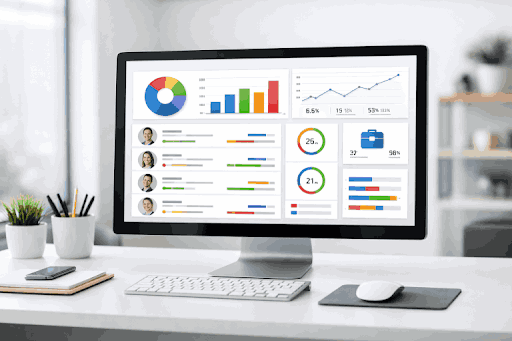
Selecting the right recruitment dashboard can significantly improve your hiring process. The best recruitment dashboards don’t just track who applied and when; they provide actionable insights that streamline workflows, identify process bottlenecks, and support hiring goals with data-driven decisions. With workforce competition at an all-time high, businesses need tools that deliver complete visibility into their recruitment pipelines. By consolidating data and performance metrics into a single view, a recruitment dashboard helps hiring teams respond to changes in candidate flow, measure recruiter effectiveness, and ultimately make smarter choices that improve hiring success.
Before selecting a dashboard tool, it’s important to define your team’s unique needs. Do you need better collaboration between recruiters? Are you hoping to improve candidate experience? Does your team struggle to track offer acceptances or candidate quality? The answers to these questions will shape the features and dashboards you need.
Once you clarify objectives, consider your current technology stack. Will the dashboard need to integrate with existing HR software or applicant tracking systems? Customization options and data import/export capabilities should match your company’s workflow and future scalability requirements. A recruitment dashboard is a business intelligence tool designed to aggregate, visualize, and analyze key hiring metrics in real-time. Recruiters and HR professionals can easily track job posting performance, candidate engagement, and recruiter efficiency in one place. These dashboards highlight trends, surface bottlenecks, and allow hiring managers to make timely improvements that directly affect recruitment quality and speed.
Why Are Recruitment Dashboards Essential?
The ability to turn raw hiring data into actionable insights is more important than ever. Recruitment dashboards help organizations improve the entire hiring lifecycle by:
- Offering complete oversight of the hiring funnel and identifying weak links in the process.
- Allowing recruiters to monitor and compare performance over time, fostering continuous process enhancement.
- Ensuring alignment between hiring teams and broader organizational goals, leading to better business and hiring outcomes.
By transforming previously siloed data into real-time information streams, dashboards enable leaders to make informed, confident decisions about talent acquisition and department budgeting. SHRM highlights that companies using dashboards consistently report easier process management and fewer miscommunications between stakeholders.
Key Metrics to Track in a Recruitment Dashboard
To maximize impact, a recruitment dashboard should focus on the most important metrics. Key data points to track include:
- Time-to-Hire: The average days from job posting to candidate offer acceptance. This reflects hiring efficiency and candidate engagement.
- Cost-per-Hire: The total expenditure for filling a role, from advertising costs to recruiter hours and onboarding expenses.
- Offer Acceptance Rate: The percentage of candidates who accept an offer, signaling employer competitiveness and candidate journey quality.
- Candidate Quality: Assessment of new-hire performance and retention potential.
Regular review of these metrics ensures the recruitment team invests time and resources where they have the greatest impact and allows for optimizing the hiring process over time.
Common Pitfalls in Recruitment Dashboards
While dashboards drive significant benefits, their impact can be diluted by common mistakes:
- Overloading Metrics: Including too many data points can overwhelm users and obscure critical insights.
- Prioritizing Speed Over Quality: Focusing only on quick hires may reduce long-term retention or result in subpar candidate fits.
- Inconsistent Metric Definitions: Differing interpretations of data among recruiters or departments can result in flawed or contradictory reporting.
Avoiding these pitfalls is crucial for ensuring that the dashboard remains a reliable and valuable tool throughout all stages of the hiring lifecycle.
Choosing the Right Recruitment Dashboard Platform
The right platform goes beyond basic tracking. It should integrate smoothly with your existing tools, offer flexibility, and scale easily as your organization grows. Consider:
- Integration Capabilities: Ensure compatibility with current HR systems, recruitment marketing platforms, and ATS.
- Customization: Look for platforms that allow you to add custom fields, rearrange modules, or personalize layouts for different roles or hiring stages.
- Scalability: Your chosen tool should evolve with you, handling more data, new users, and additional features as your hiring needs expand.
Evaluating these factors will help ensure you invest in a solution that stays relevant and effective as your business and workforce evolve.
You can also read about RIA Compliance Services for New Investment Advisors.
Frequently Asked Questions
What Are the Benefits of Using a Recruitment Dashboard?
Recruitment dashboards centralize hiring information in real time, enabling more informed hiring decisions, improved recruitment efficiency, and enhanced candidate experience.
How Do Recruitment Dashboards Improve Hiring Quality?
Dashboards highlight where candidates succeed, where they exit the process, and which hiring practices generate the best employees. This information helps companies optimize resource allocation and refine their candidate outreach.
Can Small Businesses Benefit from Recruitment Dashboards?
Yes, small businesses rely on streamlined hiring and efficient decision-making. Dashboards provide easily digestible data for quick decision-making and can scale as the business grows.
How Often Should Recruitment Dashboards Be Updated?
To keep hiring teams accurately informed, update dashboards regularly, ideally, sync data as changes occur, and refresh visualizations daily or weekly, depending on hiring volume.
Are There Free Recruitment Dashboard Tools Available?
Free and trial versions exist for many platforms. However, paid solutions usually offer critical enhancements, such as integration, customization, and reporting, to support long-term team success.
In summary, choosing the right recruitment dashboard helps organizations transform their hiring process. Prioritize platforms that offer straightforward integration, flexible analytics, and compatibility with your company’s unique needs so that clear, actionable data always supports your hiring efforts.
Conclusion
A well-chosen recruitment dashboard is more than just a reporting tool; it’s a strategic asset that enables smarter, faster, and more effective hiring decisions. By centralizing real-time data and focusing on key metrics like time-to-hire, cost-per-hire, and candidate quality, organizations can identify inefficiencies, improve collaboration, and continuously refine their recruitment processes. Success ultimately depends on selecting a platform that aligns with your goals and grows with your organization. Prioritizing integration, customization, and scalability ensures your dashboard remains relevant as your hiring needs evolve. With the right system in place, your team can move beyond guesswork and build a data-driven recruitment strategy that consistently attracts and secures top talent.