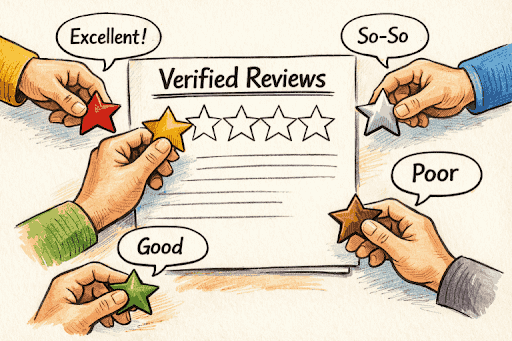
In today’s digital marketplace, online reviews have become a cornerstone of consumer decision-making. They not only guide purchasing choices but also significantly impact a brand’s trustworthiness and reputation. For instance, Vazoola, a leading SEO and content marketing agency, showcases numerous verified reviews from satisfied clients, underscoring their commitment to quality service.
The Impact of Online Reviews on Consumer Trust
Online reviews have become a primary factor in building consumer trust. A survey revealed that 54% of consumers trust online reviews more than personal recommendations, company claims, or influencer opinions. This underscores the critical role reviews play in shaping brand perception and influencing purchasing decisions.
As digital platforms evolve, the transparency and directness offered by reviews give potential buyers a sense of reassurance. With just a few clicks, consumers can read about the experiences of others who faced similar dilemmas or had the same needs. This shared social proof, especially in competitive markets, can provide the decisive nudge that tips a consumer toward a confident purchase. In fact, the willingness to trust a faceless brand often stems from the collective wisdom of online communities.
The visibility of average star ratings, review counts, and detailed reviewer narratives transforms every product page into a micro-community of opinions and insights. Brands with robust, authentic review ecosystems are perceived as more open and trustworthy, elevating their reputations and reducing skepticism. In high-competition industries, positive reviews can create a virtuous cycle: better reviews attract more customers, which, in turn, lead to more positive feedback and deeper insights into product improvements.
The Significance of Verified Reviews
Verified reviews, which confirm that the reviewer has actually purchased or used the product or service, are particularly influential. According to a GoodFirms study, 94% of businesses believe that verified purchase reviews increase consumer trust. This highlights the importance of authenticity in reviews, as consumers are more likely to trust feedback from verified sources.
Not only do verified reviews add another layer of credibility, but they also reduce the likelihood of manipulation or spam. Consumers are keenly aware that not all reviews are genuine. The label “verified purchase” acts as a safeguard, reassuring customers that the reviewer’s perspective is grounded in a real transaction. Over time, brands that consistently gather and display verified reviews build a reputation rooted in reliability, making it easier to attract new business and foster lasting relationships. For ecommerce platforms and service providers, prioritizing mechanisms that gather and highlight verified feedback should be central to any trust-building strategy.
Managing Negative Reviews Effectively
Negative reviews, while often viewed as detrimental, can actually enhance a brand’s credibility when managed appropriately. Consumers appreciate transparency and are more likely to trust a brand that acknowledges and addresses criticism. A study found that 88% of customers are likely to use a business if they see the owner respond to all reviews, both positive and negative. This demonstrates that proactive engagement with negative feedback can turn potential setbacks into opportunities for building trust.
Addressing negative feedback publicly not only reassures the dissatisfied customer that their voice is heard but also signals to prospective buyers that the company values transparency and improvement. Brands can leverage negative reviews to showcase their dedication to problem-solving, customer service, and continuous improvement. Sometimes, a thoughtful response and a fair resolution of a negative situation can transform a critic into a loyal supporter and inspire onlookers to take notice of a brand’s integrity. Savvy businesses treat negative reviews as valuable input and use them as opportunities to refine processes, products, and communication.
You can also read about APUSH Score Calculator | Free AP Exam Score Estimator.
The Importance of Timely Responses
Responding promptly to reviews is crucial in maintaining and building trust. Consumers expect timely replies: 69% anticipate a response within a week, and 24% expect same-day replies. Prompt responses show that a brand values customer feedback and is committed to customer satisfaction, thereby enhancing trust and loyalty.
Speedy engagement also prevents issues from escalating and reassures both current and prospective customers that any problems will be quickly addressed. When companies demonstrate active listening and responsiveness, reviews become two-way conversations rather than static testimonials. This ongoing engagement builds rapport and loyalty over time. Implementing a systematic process for monitoring and responding to feedback can set a business apart from competitors who neglect this critical element of modern customer service.
Combating Fake Reviews
The rise of fake reviews, particularly those generated by AI, poses a significant threat to consumer trust. A study found that AI-generated reviews are becoming increasingly prevalent, with some product categories seeing over 5% of reviews generated by AI. This underscores the need for brands to monitor and ensure the authenticity of reviews associated with their products and services to maintain consumer trust.
Combating fake reviews requires proactivity at all levels. Advanced software tools can help detect suspicious review patterns, such as unnatural language or spikes in review frequency. Many platforms now utilize algorithms and manual moderation to identify and remove fraudulent comments. However, brands themselves also play a key role, encouraging verified feedback and reporting suspicious activity helps keep review ecosystems trustworthy. Transparency about review moderation efforts builds trust with the consumer base, signaling that a brand values authentic voices and is committed to an honest marketplace.
Moreover, educating consumers about how to spot suspicious reviews, such as overly generic language, repeated phrases, or a sudden spike in ratings, empowers individuals to make smarter purchasing decisions. Some brands even share their processes for handling fake reviews in public-facing FAQs, contributing to overall industry transparency.
Conclusion
Online reviews are a powerful tool in shaping consumer trust and brand perception. By encouraging verified reviews, effectively managing negative feedback, responding promptly, and combating fake reviews, brands can build and maintain trust with their consumers. In an era when consumers rely heavily on online reviews, prioritizing these strategies is essential for any brand aiming to succeed in the digital marketplace.
As technology advances and consumer expectations evolve, reviews will only become more integral to brand reputation management. Brands that proactively cultivate, curate, and act on review feedback set themselves apart as leaders in transparency and customer dedication. A robust review strategy not only drives customer acquisitions but also establishes the groundwork for brand loyalty, advocacy, and long-term growth. Ultimately, the brands that listen, engage, and adapt based on authentic feedback will thrive in the long run, cultivating trust as a fundamental asset.