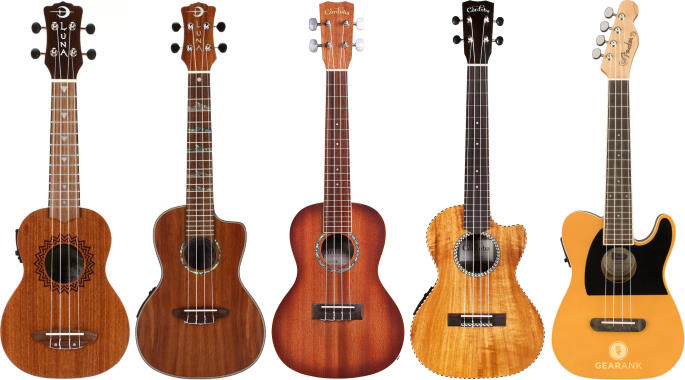
You have decided to learn the best ukulele for beginners. Smart choice. It is one of the friendliest instruments out there, cheap to start, easy on the fingers, and genuinely fun within days.
Then you start shopping, and the excitement fades a little. Soprano or concert? Twenty dollars or eighty? Fancy wood or plain? A dozen questions pop up before you have even strummed a note. It is easy to feel stuck before you begin.
Here is the reassuring part. Choosing your first ukulele is not complicated once you know what actually matters. And getting from “brand new owner” to “playing an actual song” is faster than you would ever guess.
Most guides stop at telling you what to buy. This one goes further. I will help you pick the right first ukulele, then walk you straight into your first chords and songs, so your new instrument does not end up gathering dust in a closet.
By the end, you will know exactly what to buy, how to set it up, and how to play music in your very first week. Let’s turn that idea into actual sound.
You can also read about APUSH Score Calculator.
Summary
By the end of this guide, you will know how to pick your first ukulele and start playing real songs on it.
First, you will learn what truly matters when choosing a beginner ukulele. A few key features separate a joy to play from a frustrating dud.
Then you will learn how to pick the right size, since that choice shapes how the instrument feels in your hands.
You will get honest, trusted brand suggestions so you avoid the low-quality traps that make beginners quit.
After that, you will learn how to tune your ukulele and get it ready to play, a step many new owners skip and regret.
Next comes the fun part. You will learn your first few easy chords and how to switch between them smoothly.
Finally, you will discover how simple it is to play your first songs, plus habits that keep you improving. By the end, you will not just own a ukulele. You will actually play it.
Best ukulele for beginners: What Makes a Good First Ukulele
Before picking a specific model, understand what separates a good beginner ukulele from a bad one. A couple of features matter far more than looks.
The most important is the tuners. You want geared tuners, the kind with a small gear mechanism, rather than simple friction pegs. Cheap friction tuners slip constantly, so the instrument falls out of tune within minutes. That is the single biggest reason beginners get frustrated and give up. Geared tuners hold their pitch and save your sanity.
The setup matters too. This is how high the strings sit above the fretboard. If they sit too high, pressing them down hurts your fingers and sounds buzzy. A decent beginner ukulele comes set up so it plays comfortably right away.
Do not stress about wood or fancy materials. Most affordable ukuleles use laminate wood, which is durable and sounds perfectly nice for learning. Save the solid-wood upgrade for later, once you know you love playing.
Picking the Right Size
Ukuleles come in a few sizes, and this choice affects both comfort and sound. For beginners, two sizes stand out.
The soprano is the smallest and most traditional. It gives you that classic, bright, cheerful ukulele sound most people picture. It is also usually the most affordable. The one downside is the tight spacing between frets, which can feel cramped if you have larger hands.
The concert is slightly bigger. It offers a little more room for your fingers and a warmer, fuller tone. Many adult beginners find it more comfortable to play, and it costs only a bit more.
Here is a simple way to decide. If you want the traditional sound, have smaller hands, or are buying for a child, go soprano. If you are an adult who wants more finger room, go concert. Both are excellent starting points, so you truly cannot pick wrong here.
Trusted Brands to Start With
Once you know the features and size, sticking with a trusted brand removes most of the risk. A few names consistently deliver good beginner instruments.
Kala is one of the most recommended beginner brands. Pros: reliable tuners, warm tone, and dependable setups across many models. Cons: the sheer number of options can feel overwhelming at first.
Cordoba brings guitar-making experience to its ukuleles. Pros: polished feel and fuller tone, especially in concert size. Cons: often sits at the higher end of the beginner price range.
Lanikai and Fender round out the safe choices. Pros: both make solid, playable beginner instruments, and Fender adds stylish designs. Cons: you pay a little for the brand name.
Here is my honest opinion. Do not obsess over finding the “perfect” brand. Any well-reviewed model from these makers will serve you beautifully. The best ukulele is simply one that stays in tune and feels good, so you actually keep playing it. Once it arrives, your real journey begins.
Tune It Before You Play
Here is the step most new owners skip, and it quietly ruins their first experience. You must tune your ukulele before you play, and keep tuning it often at first.
A standard ukulele is tuned to four notes, commonly remembered by the little phrase “G-C-E-A.” The easiest way to get there is a clip-on tuner, which clamps onto the headstock and shows you each note. Many are cheap, and there are free tuning apps too. This tiny tool makes a huge difference.
Expect a lot of tuning in the beginning. Brand new strings stretch a great deal during the first week or two, so they slip out of tune quickly. This is completely normal, not a sign of a bad instrument. Keep retuning, and the strings will soon settle and hold much better.
Why does this matter so much? Because an out-of-tune ukulele sounds bad no matter how well you play, and that discourages beginners fast. A properly tuned one sounds lovely even with simple chords, which keeps you motivated. Now, let’s make some music.
Your First Easy Chords
This is where owning a ukulele turns into playing one. The great news is that a few beginner chords unlock a surprising number of songs.
Start with the easiest chord of all, C major. You press just one finger on one string, and strum. That is it. Hearing a clean chord on your very first try feels genuinely exciting and proves you can do this. From there, try A minor and F major, which each use only one or two fingers.
Practice pressing the strings firmly, right behind the metal fret bars, so the notes ring clearly instead of buzzing. Your fingertips may feel a little sore at first. That is normal and fades within a couple of weeks as light calluses form.
The real skill is not the chords themselves but switching between them. Practice moving slowly from C to A minor and back, over and over, until your fingers learn the path. Speed comes later. Smooth, steady changes are the foundation of playing actual songs, which are closer than you think.
Playing Your First Songs
Here is the payoff that most buying guides never mention. You can play real songs with just a handful of chords, often in your first week.
Countless popular songs use only three or four simple chords, sometimes the very ones you just learned. Once you can change between two or three chords, you can strum along to easy tunes. Start with a basic down-strum in a steady rhythm, and do not worry about fancy strumming patterns yet.
A practical approach works best. Pick one easy song you love, look up its beginner chords online, and practice just that song until it flows. Learning through a song you enjoy is far more motivating than drilling chords in isolation. You will happily practice for longer without it feeling like work.
Keep your sessions short and frequent. Ten or fifteen minutes a day beats one long, frustrating session per week. Looking ahead, learning tools keep getting better, with countless free tutorials and apps that teach beginners faster than ever. Lean on them, and your progress will surprise you.
You can also read about David Allan Coe Songs.
Conclusion
You now have the full path, from buying your first ukulele to strumming your first song. No more feeling stuck before you start.
Keep the key points in mind. Look for geared tuners and a comfortable setup, choose a soprano or concert size based on your hands, and stick with a trusted brand like Kala or Cordoba. Then tune it faithfully, learn a few easy chords like C and A minor, and practice smooth changes.
Above all, remember that the goal is to play, not just to own. The right instrument and a few simple chords are all you need to make real music in your first week. Fun is what keeps you going, so chase that early win.
Here is your one clear next step. Pick a beginner ukulele that fits your budget and hand size, grab a clip-on tuner with it, and commit to learning one easy song this week. That first song is the moment the whole thing clicks.
So tell me, what song do you dream of playing first, and are you leaning toward a classic soprano or a roomier concert ukulele?