You are in the kitchen, apron on, ready to cook. The recipe looks simple enough. Then you hit a wall. It calls for a quart of broth. But your measuring cup only shows ounces.
You freeze. How many ounces in a quart? You could guess, but guessing with liquids is how soups turn watery and sauces go wrong. So you stand there, phone in hand, searching for an answer.
Sound familiar? This tiny conversion trips up home cooks, bakers, and students all the time. Quarts, ounces, cups, pints- they blur together into a confusing mess of numbers.
Here is the good news. The answer is simple, and once you learn it, you will never forget it. There is even an easy pattern that unlocks every kitchen conversion at once.
So how many ounces are in a quart? This guide gives you the clear answer, a handy chart, and one sneaky trap that fools almost everyone. By the end, you will measure with total confidence. Let’s clear it up for good.
Summary
By the end of this guide, you will know exactly how many ounces are in a quart, with zero confusion.
First, you will get the quick, direct answer. It is one simple number you can use right away in the kitchen.
Next, you will get a handy conversion chart. It shows how cups, pints, quarts, and gallons all connect, so you can convert anything fast.
Then comes the trap that fools almost everyone. Fluid ounces and weight ounces are not the same thing, and mixing them up can ruin a recipe.
You will also learn why you might sometimes see a different number, like 40, and which one is right for your kitchen.
You will get honest tips on the best tools for measuring, plus a simple pattern that makes every conversion easy to remember.
Finally, you will never need to search this again. Read on, and turn kitchen confusion into confidence, one measurement at a time.
You can also read about Foodies Mexico.
How Many Ounces in a Quart?
Let’s cut straight to it, because you came here for one answer. Here it is, plain and simple.
There are 32 fluid ounces in one quart. That is the number to remember for cooking, baking, and everyday liquid measuring. Write it on a sticky note if you like.
This applies to the standard measuring system used in most home kitchens here. So when a recipe says one quart of milk, broth, or water, you can measure out 32 fluid ounces and know you are exactly right.
Simple, right? But a quart connects to other units too, like cups and pints. Knowing how they all fit together makes you unstoppable in the kitchen. So let’s see the full picture.
The Simple Conversion Chart
Here is where it all clicks. A quart is part of a neat family of measurements, and they follow an easy pattern. Let’s map it out.
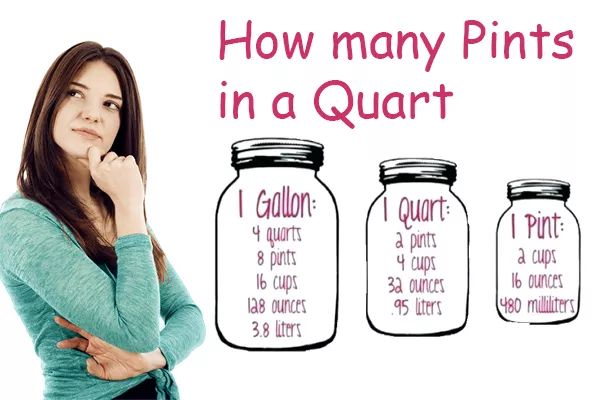
Start small and build up. One cup equals 8 fluid ounces. Two cups make one pint, which is 16 fluid ounces. Two pints make one quart, which is 32 fluid ounces. And four quarts make one gallon, which is 128 fluid ounces.
Here is a handy quick reference to keep in mind:
- 1 cup = 8 fluid ounces
- 1 pint = 16 fluid ounces = 2 cups
- 1 quart = 32 fluid ounces = 2 pints = 4 cups
- 1 gallon = 128 fluid ounces = 4 quarts
Notice something cool? Each step basically doubles. That pattern is your secret weapon, and we will come back to it. But first, let’s cover the trap that catches almost everyone.
Fluid Ounces vs Weight Ounces
This is the mix-up that ruins recipes, and almost no one explains it. So pay close attention, because it matters more than the number itself.
There are two kinds of ounces, and they are not the same. A fluid ounce measures volume, meaning how much space a liquid takes up. A regular ounce measures weight, meaning how heavy something is. Same word, very different meaning.
Here is why this matters. When we say a quart is 32 ounces, we mean 32 fluid ounces of volume. This works perfectly for liquids like water and milk. But a quart of a dry item, like flour, will not weigh 32 ounces on a scale. Volume and weight simply are not the same thing.
So remember this golden rule. For liquids, use fluid ounces and measuring cups. For dry weight, use a scale. Confusing the two is the number one reason a recipe goes wrong, and now you will never make that mistake.
Why You Might Sometimes See 40
Here is a twist that confuses people. Sometimes you might spot a quart listed as 40 ounces instead of 32. Are you losing your mind? No. There are two different measuring systems.
The system used in most home kitchens here defines a quart as 32 fluid ounces. But another system, called the imperial system and used in some places, defines its quart a bit larger, at 40 imperial fluid ounces. The ounces themselves are also slightly different sizes.
This is why a recipe or website from elsewhere might show a different number. It is not a mistake. It is just a different measuring standard.
For your kitchen, keep it simple. Stick with 32 fluid ounces per quart, since that is the standard here. Only worry about the other version if you are following a recipe that clearly uses the imperial system.
Dry Quart vs Liquid Quart
Ready for one more layer? There is also a difference between a liquid quart and a dry quart. Do not worry, this one is easy and rarely matters for most cooking.
A liquid quart, the one we have focused on, measures liquids and equals 32 fluid ounces. This is what nearly every recipe means when it says a quart. It is your default.
A dry quart is a separate unit used mainly for measuring dry goods like berries or produce by volume. It is actually a little larger than a liquid quart. But here is the reassuring part. You will almost never need it for normal home cooking and baking.
So keep this simple. For nearly everything you cook or bake, “quart” means the liquid quart at 32 fluid ounces. Unless a recipe specifically says “dry quart,” you can safely ignore the difference and move on.
Handy Tools for Measuring
Knowing the number is great, but the right tools make measuring easy and accurate. Here are the best options, with honest pros and cons.
Liquid measuring cups. These clear cups with a spout and ounce markings are made for liquids. Pros: accurate, easy to read, cheap. Cons: you may need to measure in parts, since many top out at 2 or 4 cups.
A kitchen scale. Perfect for anything measured by weight. Pros: highly accurate, great for dry ingredients, avoids the fluid-versus-weight trap. Cons: it costs a bit more and needs batteries.
Dry measuring cups. These nested cups are best for scooping dry goods. Pros: simple and cheap for flour or sugar. Cons: not meant for liquids, so do not use them for broth or milk.
A conversion app or chart. A quick digital helper for any conversion. Pros: fast, free, handles any unit. Cons: you need your phone handy. Honestly, a printed chart on the fridge often works just as well.
Easy Tips to Remember It Forever
Let’s make sure you never forget this again. A few simple tricks will lock it in for life.
Here is my favorite, and my bold tip. Stop memorizing random numbers and just learn one doubling pattern. Cups to gallon goes 8, 16, 32, 128. A cup is 8 ounces, then each bigger unit roughly doubles up. Learn that flow, and you unlock every kitchen conversion at once, no memorizing needed.
Another easy trick is the “4 cups” shortcut. Since a quart is 4 cups, and each cup is 8 ounces, you can quickly do 4 times 8 to get 32. Simple math, instant answer.
You can also read about APUSH Score Calculator.
Finally, keep a small chart on your fridge or saved on your phone. Looking ahead, more kitchen scales now show instant conversions on a screen, and smart tools are making this even easier. But honestly, once that doubling pattern clicks, you will not need any of them.
Conclusion
That kitchen freeze-up is over for good. You now know that a quart holds 32 fluid ounces, and you understand how every kitchen unit connects.
Keep the key points close. A quart equals 32 fluid ounces, 2 pints, or 4 cups. Fluid ounces measure volume, while weight ounces measure heaviness, so never mix them up. And the whole system follows an easy doubling pattern: 8, 16, 32, 128.
Above all, remember the simplest takeaway. For any recipe that calls for a quart of liquid, just measure 32 fluid ounces, and you are exactly right every time.
Here is your one clear next step. Write “1 quart = 32 fl oz = 4 cups” on a sticky note and pop it on your fridge. The next time a recipe asks for a quart, you will smile instead of scrambling.
So tell me, what are you cooking up that sent you searching for this, and are you measuring a liquid or something dry?