Introduction
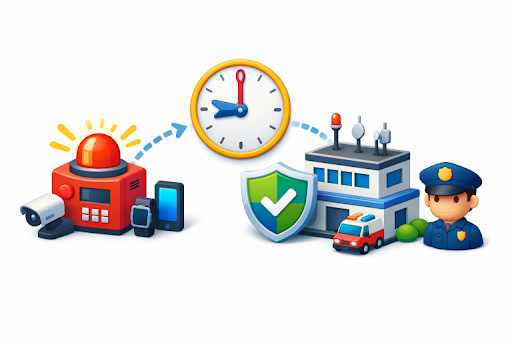
When emergencies strike, the swift relay of information to first responders is crucial for public safety. Traditional alarm systems, relying heavily on manual intervention and verbal communication, have long posed bottlenecks. Today, digital alarm data transmission is changing the way alarm monitoring centers alert emergency services, enabling responses measured in seconds rather than minutes. For those interested in upgrading their systems to enable faster emergency notifications, click here to discover dedicated solutions designed for proven speed and accuracy.
This migration from analog and human-driven reporting to fully automated digital processes marks one of the most substantial leaps in emergency communication technology. The reliability and speed of these systems are setting new standards in saving lives, property, and resources nationwide. Today, the focus is on making these solutions accessible, unified, and reliable for public safety answering points (PSAPs) and alarm centers alike.
These advancements not only improve how quickly help arrives, but also enhance the data relayed during incidents. Accurate and rapid information enables emergency dispatchers to make better decisions, prioritize effectively, and deploy resources with greater confidence. With increasing incidents of natural disasters and urban emergencies, minimizing human error and maximizing information flow has never been more important.
As first responders face mounting challenges, technology-driven alarm transmission stands as a critical ally in fortifying community safety and ensuring that the right help reaches those in need at the right moment. Innovations in this area demonstrate the vital role of digital transformation within the public safety ecosystem. For a broader look at the impact of modern alarm monitoring on emergency preparedness, readers can review updates from Quick Response coverage on national 911 dispatch upgrades.
The Shift to Digital Alarm Transmission
Historically, when an alarm was triggered, dispatchers at monitoring centers would manually call the nearest 911 center, providing details about the emergency. These conversations, sometimes hampered by language barriers, miscommunication, or transcription errors, often delay critical action. In recent years, the security industry has been adopting advanced digital protocols such as the Automated Secure Alarm Protocol (ASAP). Systems like ASAP enable the seamless and direct transfer of alarm information from central stations to PSAPs in a structured, electronic format.
This transition eliminates the need for repetitive verbal exchanges, ensures the integrity of transmitted data, and accelerates dispatch. Notable companies like Quick Response have reported remarkable improvements in reliability and response speed following the adoption of ASAP-to-PSAP. Faster, more precise communication with 911 operators results in response teams being dispatched sooner, giving every incident the urgent attention it deserves.
Benefits of Automated Alarm Systems
- Reduced Response Times: With digital delivery, alarm messages often reach dispatchers within seconds, compared to the several minutes traditional methods can require. This time savings can be crucial in life-threatening situations.
- Improved Data Accuracy: Direct transmission reduces the likelihood of incorrect information being relayed, as data is automatically transferred without human rewriting or interpretation.
- Fewer False Alarms: Automated systems can include enhanced verification steps, helping to screen out non-critical alarms and allowing emergency responders to focus efforts and resources where they are most needed.
Minimizing manual information exchange not only increases speed but also enhances the credibility and usefulness of every alert sent to public safety agencies.
Integration with Smart Technologies
The next phase of alarm system innovation harnesses the power of smart devices, sensors, and artificial intelligence to deliver even richer situational data during emergencies. For example, leading providers like ADT have advanced their security platforms with integrated video, audio analytics, and two-way communication between homes or businesses and monitoring centers. These systems instantly package key details, such as on-site video, motion patterns, and IoT sensor data, streamlining their digital delivery to emergency call centers.
Through these integrated platforms, first responders can access critical information before arriving at the scene, improving situational awareness and allowing for real-time strategy adjustments. As more municipalities and agencies adopt connected devices within their emergency response frameworks, the industry expects even greater transparency and coordination in high-stress scenarios. The evolving role of smart technology in public safety continues to be a subject of coverage in mainstream news, such as Quick Response articles on emergency tech innovation.
Real-World Implementations
Progress is more than conceptual; numerous agencies in the United States are actively deploying digital alarm delivery. Quick Response, in partnership with Intrado, channels alarm signals to over 600 emergency communications centers, reducing dispatch times to as little as 15 seconds. This partnership is helping to set benchmarks for others looking to modernize their emergency workflows.
At a regional level, LakeComm 911 in Illinois has introduced an automated processing system, streamlining its public safety operations. These implementations demonstrate the positive impact of digital transmission in both urban and smaller community settings, providing blueprints for other regions seeking to transform their emergency communications infrastructure.
You can also read about How Technology is Transforming Emergency Vehicles.
Challenges and Considerations
- Infrastructure Upgrades: Modernizing to fast, automated systems requires substantial investments in hardware, software, and personnel training. Budget constraints may slow the rate at which municipalities can fully adopt these solutions.
- Data Security: Given that alarm data can include sensitive or private information, establishing strong cyber defenses is paramount to protect against breaches and unauthorized access.
- Standardization: As agencies adopt new technology, developing uniform communication and operational protocols is essential. This ensures consistent service regardless of jurisdiction, vendor, or dispatch center involved.
While these hurdles exist, ongoing collaboration between industry leaders, standards bodies, and public safety agencies is essential to navigate these complexities.
Future Outlook
The horizon of digital alarm data transmission holds even more promise with the infusion of artificial intelligence, machine learning, and an expanding Internet of Things (IoT) ecosystem. Predictive algorithms could soon allow alarm systems to anticipate certain emergencies, deploying resources in advance or alerting authorities to trends before they escalate. The continued proliferation of smart devices links additional potential data sources into the emergency response matrix, driving innovation in response speed and the quality of information supplied to dispatch centers and field operators.
The anticipated growth of these technologies mirrors the digital transformation in other critical infrastructure sectors and invites further investment and collaboration from both the public and private sectors committed to public safety.
Conclusion
The migration to digital alarm data transmission is redefining emergency response capabilities nationwide. Enhanced by smart technologies and automated, these new systems dramatically shorten response times, reduce human error, and provide responders with critical, real-time situational intelligence. Ongoing investment in secure, standards-based implementations will only further improve safety outcomes for communities everywhere.