Key Takeaways
- Regular inspections are crucial for maintaining roof integrity and safety.
- Adhering to safety guidelines protects both inspectors and building occupants.
- Proper documentation and maintenance can lead to insurance benefits and compliance with regulations.
Table of Contents
- Importance of Regular Inspections
- Pre-Inspection Safety Measures
- Conducting the Inspection Safely
- Post-Inspection Procedures
- Common Safety Hazards
- Training and Certification
- Legal and Regulatory Compliance
- Benefits of Professional Inspections
Ensuring the safety and longevity of a commercial roof is paramount for building owners and facility managers. Regular roof inspections, such as those completed during a commercial roof inspection by Delta Innovative Services, serve as a proactive approach to identifying early signs of damage and preventing expensive emergency repairs. These inspections not only protect the value of the property but also uphold workplace safety standards.
Properly conducted roof inspections are central to maintaining building integrity and occupant safety. By following a systematic approach, building owners can uncover hidden defects and comply with demanding insurance requirements. Without established safety practices, workers may be exposed to hazardous situations that could lead to injuries or even fatalities.
Many commercial roof failures are preventable if issues are found and addressed early. Regular inspections performed by professionals trained in safety protocols also help document the roof’s condition for warranty claims and compliance with industry standards. Implementing these protocols consistently will support long-term cost control and regulatory alignment for your facility.
The critical nature of this work is highlighted by industry organizations such as the National Roofing Contractors Association, which advises that regular, documented inspections remain the first line of defense against weather damage, leaks, and structural failures for commercial properties.
Importance of Regular Inspections
Regular commercial roof inspections are essential for addressing small issues before they turn into costly repairs that disrupt business operations. According to the NRCA, most problems, such as minor leaks or drainage issues, can be detected early and resolved efficiently with biannual inspections in spring and fall. Such vigilance helps keep the roof under warranty and in top condition, maximizing the asset’s usable life and protecting the interior of your building.
These regular checks also help meet insurance requirements and serve as documentation when filing claims, which could be the difference between receiving support and having claims denied. The peace of mind provided by a consistent inspection schedule cannot be overstated, especially in regions with severe weather fluctuations.
Pre-Inspection Safety Measures
Before starting any commercial roof inspection, strict safety protocols must be followed to minimize risk:
- Risk Assessment: Start with a careful evaluation of potential hazards. Consider unstable surfaces, inclement weather, the possibility of hazardous materials, and the overall structural integrity of the roof.
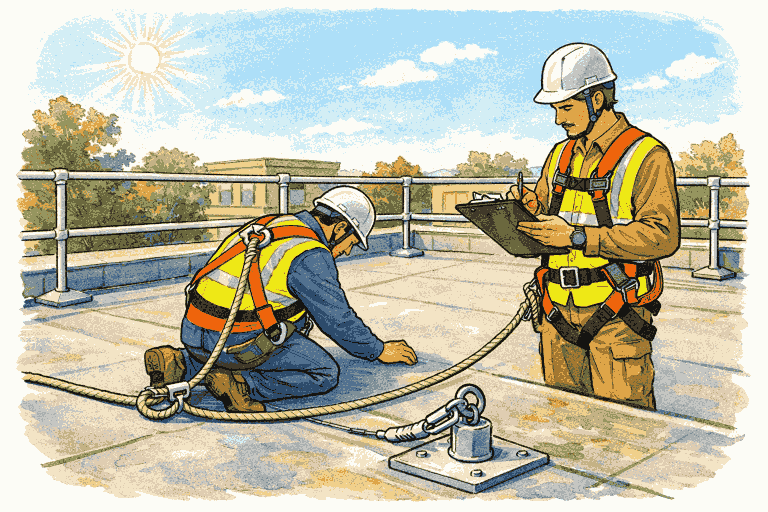
- Personal Protective Equipment (PPE): All inspectors must wear the correct protective equipment. This means hard hats, harnesses, high-visibility vests, and slip-resistant footwear to mitigate fall and injury risks.
- Safety Equipment: Confirm that all fall protection systems are installed, maintained, and in good working order. These may include approved anchor points, temporary guardrails, and personal fall arrest systems. According to the Occupational Safety and Health Administration (OSHA), such equipment is mandatory whenever employees work at heights greater than six feet.
Conducting the Inspection Safely
With pre-inspection measures in place, inspectors should follow several fundamental practices to ensure safety throughout the inspection:
- Use of Fall Protection: Always be connected to a fall arrest system when working near edges or steep slopes. Even experienced workers must prioritize this rule.
- Buddy System: No inspection should ever be performed alone. Having a partner nearby provides quick help in emergencies and ensures responsible oversight of safety protocols.
- Clear Communication: Reliable communication must be maintained between team members and anyone on the ground. Radios, cell phones, or hand signals may be used to ensure instructions and updates can be passed along in real time.
Post-Inspection Procedures
After inspecting the roof, it is crucial to follow a rigorous post-inspection process:
- Debriefing: Team members should convene for a quick review of all findings and ensure that nothing has been missed or miscommunicated.
- Reporting: A detailed report should be created covering every issue observed, including photos where possible, along with notes on the condition of safety measures during the inspection itself.
- Follow-Up: Immediate hazards must be prioritized for repair, and the next inspection should be scheduled to maintain a proper maintenance cycle.
Common Safety Hazards
Commercial roofs present several prominent hazards that require attention and proper safety precautions:
- Slippery Surfaces: Moisture, ice, or algae can make roofs dangerous, so inspections should be postponed in hazardous conditions whenever possible.
- Structural Weaknesses: Portions of the roof may have hidden structural damage due to water infiltration or age, increasing the risk of collapse under weight.
- Electrical Hazards: Proximity to overhead power lines or rooftop mechanical equipment can increase the likelihood of electric shock. Only licensed professionals should address any electrical issues found.
For a deeper dive into these hazards and real-world prevention tips, the OSHA Roofing Safety Guidelines provide helpful insights and regulatory detail.
Training and Certification
Commercial roof inspectors should be trained and certified in fall protection, hazard recognition, and emergency response. Training programs from organizations like OSHA and the National Institute for Occupational Safety and Health (NIOSH) ensure inspectors are up to date on the latest safety protocols and industry best practices. Continual education and recertification are strongly recommended so that inspectors can adjust to new regulations or technologies in the roofing industry.
Legal and Regulatory Compliance
Compliance with all relevant legal regulations is not optional. OSHA sets forth strict mandates regarding the use of personal protective equipment, fall prevention systems, and protocols for roof work. Building owners and managers are legally obligated to verify that these standards are met both for their staff and for third-party contractors. Staying current with evolving codes and regulations maintains protection from fines and lawsuits while keeping everyone on-site safe.
You can also read about The 5 Best Home Remodeling Contractors in Chicago.
Benefits of Professional Inspections
Hiring professional, qualified inspectors for commercial roof assessments brings several tangible benefits. Professionals have the training and experience to identify subtle signs of roof failure and assess the full scope of needed maintenance. Their familiarity with safety regulations reduces the risk of accidents, while their reports provide clear evidence for insurance or warranty claims. Most importantly, professional inspections help ensure the roof endures season after season, preventing costly emergency repairs and unplanned interruptions to business operations.
Prioritizing safety throughout the inspection process is vital to protecting property and the wellbeing of all workers. Implementing these safety practices helps building owners maintain efficient operations, achieve regulatory compliance, and prolong the lifespan of their commercial roofing systems.