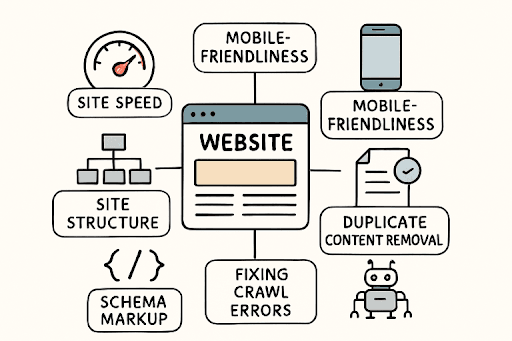
A website runs better when its design works well, not just its words. Great posts or items pull people in, yet those visitors won’t stick around if pages load slow or navigation trips them up. Here’s the twist – technical SEO services while helping Google notice the site more easily. Companies tuning things like speed, links, and mobile layout tend to see easier visitor flows alongside stronger visibility online. Strong bones beneath the surface let ease of use climb, then rankings follow close behind.
Behind every smooth website visit lies careful tuning – speedy loading, steady performance on any device, clear data paths for search bots plus real people. This kind of work quietly lifts how often pages show up in searches while helping folks stay engaged once they arrive. When sites run without hiccups, fewer roadblocks stand between visitors and what they came for – a win not just for ease but also rankings. Tweaking these hidden elements matters because frustration fades when everything works like it should. Search engines notice. So do users.
Site Speed and Core Web Vitals
Nowadays people want websites to open fast, yet most won’t wait long if things are slow. A study via Think with Google found just one second of waiting drops success rates by twenty percent. When pages snap into place, folks stick around longer, clicking more without thinking. Hidden tweaks behind the scenes fix sluggishness – shrinking picture sizes helps, also storing data locally does too, sending files from nearby servers works well, cleaning up digital clutter speeds everything else. Speed shows up in Google’s Core Web Vitals – metrics that track how fast pages load, stay stable visually, while users interact. Hitting those targets tends to boost visitor experience just as much as search rankings do.
Mobile-Friendliness and Responsive Design
Phones changed how people browse, pushing companies to rethink website design across gadgets. More than six out of ten visits happen through handheld screens today. Clunky pages – ones that stretch sideways or need constant zooming – lose visitors fast. Since Google started favoring mobile versions when sorting results, how well a page works on phones shapes where it appears in search. When screens change, the layout changes too – fluid adjustments keep buttons, text, and links easy to use on every device. Instead of breaking, everything shifts smoothly so people can move around without trouble.
Clean URL Structure and Site Architecture
Start with how people move through a website – it usually follows the layout. A clear setup guides visitors just like it guides bots. Short, meaningful web addresses matter because they make navigation smoother. Pages stacked in a sensible order help systems process content without confusion. Linking main sections to their relevant child pages passes importance around while easing discovery. Neat links paired with an orderly design let users and crawlers grab what they need faster. Structure shapes access.
You can also read about High-ROI Tech Upgrades for Modern Rental Properties.
Eliminating Duplicate Content
One page copied elsewhere starts problems. Search tools get stuck picking what to show when two spots have identical details. Users wander into confusion, clicking around without clear direction. A single tag called canonical points bots toward the main version – like a signpost saying “this one first.” Merging repeated pages helps too, pulling overlap into one solid destination. Each title and description needs its own voice so nothing feels recycled. Separate paths mean cleaner navigation for people plus sharper signals to algorithms. Trust builds slowly when every corner offers something genuine instead of echoes.
Structured Data and Schema Markup
A special kind of code called schema markup goes into your webpage so search engines grasp what the page is about. When you use structured data, search results may show extras – like reviews or questions – right there in the listing. These detailed previews often get more clicks because they give people clearer info at a glance. Knowing precisely what items, stories, or happenings appear on a site becomes crucial as search tools grow smarter and rely more on artificial intelligence. Those wanting deeper insight can turn to Google Search Central, where setup tips and examples are laid out plainly.
Fixing Crawl Errors
Pages vanish from searches when bots hit roadblocks trying to reach them. Blocked by faulty links, confused by wrong robots.txt rules, or turned away by server hiccups – access fails silently. Instead of showing up, whole chunks of sites go unseen, skipped without warning. Tools such as Google Search Console shine light on these hidden snags. Redirects fix dead ends. Sitemaps guide lost crawlers back on track. Server tweaks restore smooth entry. When pathways clear, every page gets its chance to appear. Nothing flashy. Just working access, one scan at a time.
Impact of Technical SEO on User Experience
Behind the scenes tweaks quietly shape what visitors actually feel when they land on a page. Faster load times, clearer navigation, smoother structure – these things add up without fanfare. One report from Search Engine Land found sites fixing technical SEO issues gained 56% more visibility in results, simply by cleaning up under the hood. A solid third of how well pages place in rankings ties back to Core Web Vitals, revealing just how much real-world performance weighs in. Stability during loading, quick feedback to taps or clicks – search engines treat those like signals of trust.
Conclusion
When companies want better results online, solid technical SEO matters most. A quick-loading website, built right for phones, makes things smoother plus helps people stay longer. Clear structure across pages guides visitors without confusion – search engines notice this too. Adding detailed schema code quietly boosts how content shows up in searches. Checking the system often reveals hidden problems like dead links or pages that won’t index. Small fixes add up, keeping everything working well even when rules change behind the scenes. Strong backend setup means real users find what they need – the right message at the right time. Better flow leads to more interaction, naturally lifting key numbers over months. Sites built smart from within tend to grow steadier than those relying on shortcuts. In a world crowded with digital noise, skipping these basics just doesn’t work anymore.