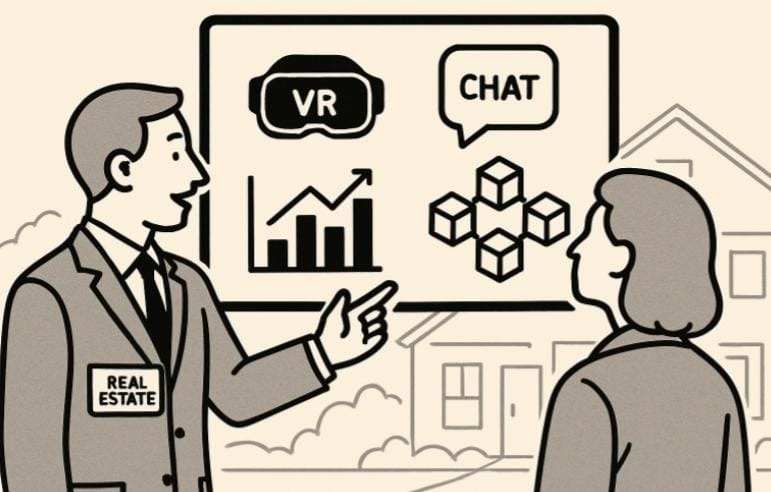
As the real estate industry rapidly evolves, agents and clients alike must stay ahead of the curve. Innovative knowledge-sharing tools and strategies have begun to redefine how market professionals collaborate, make decisions, and communicate with clients. From immersive viewing tools to data-driven analytics, these advancements are streamlining processes and improving outcomes for all parties. Sandy Springs, GA, real estate agent Lindsay Levin is among those embracing these digital innovations, using them to enhance every transaction.
Today’s real estate climate demands not only quick responses but also deep insights. Clients want to visualize potential homes more realistically, while agents seek ways to predict trends, automate administrative work, and deliver personalized experiences. New technologies like virtual reality tours and artificial intelligence-powered tools are filling these needs, setting new standards for efficiency, transparency, and service quality.
In this article, we’ll explore the top innovative approaches transforming real estate knowledge sharing. Whether it’s blockchain ensuring secure transactions or machine learning revolutionizing property valuations, understanding these tools has become essential for anyone involved in buying, selling, or managing property.
By leveraging these technologies, agents and clients are experiencing more informed, convenient, and successful engagements in an industry where change is constant. Read on to discover the future-forward technologies that are shaping the next era of real estate.
Virtual Reality (VR) Property Tours
Virtual reality is transforming the way properties are showcased. With VR property tours, clients no longer need to be physically present to experience a home. Interactive and immersive, these tours allow buyers to explore every corner of a property from their own devices. This technology is especially valuable for long-distance clients or busy professionals who want to efficiently screen multiple properties. VR-driven tools also empower real estate agents to reach a broader audience and add a distinct, modern touch to their marketing strategies.
Augmented Reality (AR) for Visualization
Augmented reality is taking property tours to the next level. This advanced tech overlays digital elements—such as furniture, renovations, or landscaping changes—onto real-world spaces, as seen through a smartphone or tablet. Clients can immediately visualize a property’s potential, customizing the space virtually to fit their style and needs. According to Forbes, AR not only enhances buyer engagement but also improves satisfaction by delivering a highly personalized preview of prospective homes.
AI-Powered Chatbots for Instant Assistance
AI chatbots have brought real-time efficiency to client communication in real estate. These chatbots answer questions, schedule showings, and provide property details 24/7, catering to the expectation of immediate responses. For agents, chatbots handle routine inquiries and filter qualified leads, enabling more time to focus on complex client needs. As the industry becomes more competitive, chatbots offer a significant edge by streamlining workflow and bolstering customer service quality.
Predictive Analytics for Client Insights
Predictive analytics uses historical and current data to forecast future trends, property values, and buyer needs. Real estate professionals harness these algorithms to refine pricing strategies, target marketing efforts, and identify emerging investment opportunities. This proactive approach is invaluable for anticipating market shifts and providing tailored recommendations. Leading agents rely on predictive analytics to support long-term client relationships and strategic decision-making.
Blockchain and Smart Contracts
Blockchain introduces a transparent, secure, and tamper-proof ledger for real estate transactions. With records that cannot be altered retroactively, blockchain technology dramatically reduces fraud and builds greater trust between buyers and sellers. Smart contracts, which are digital agreements that execute automatically when predefined conditions are met, further streamline complex tasks such as escrow, title transfers, and lease management. This not only enhances efficiency but also reduces reliance on intermediaries, thereby curbing costs and expediting deals.
Big Data and Analytics
Big data empowers real estate agents and investors to decode consumer behavior and market trends. By assessing massive datasets—from social media activity to mortgage rates—professionals can fine-tune their marketing and engagement strategies. Robust analytics platforms also help identify lucrative investment properties by crunching data on neighborhood trends, risk metrics, and projected returns. Big data, therefore, enables smarter, data-backed decisions across the entire real estate value chain.
Sustainable Strategies in Real Estate
Sustainable development is increasingly influencing property markets worldwide. Embracing green construction techniques and materials not only reduces a building’s environmental footprint but can also yield significant cost savings over time. Innovative methods like 3D printing also facilitate precise scale models and adaptive designs that further sustainability goals.
Machine Learning and Automated Valuation Models
Machine learning is reshaping property evaluation and asset management. Automated valuation models (AVMs) leverage algorithms to assess property values instantly and accurately, drawing on real-time market data, geolocation, and trends. This minimizes human error and speeds up often laborious analysis, enabling quicker and more informed decision-making. Additionally, machine learning can predict the return on investment for potential renovations, providing sellers and investors with critical foresight before they commit to upgrades or refurbishments.
Embracing these innovative knowledge-sharing approaches empowers real estate professionals to deliver superior service, foster transparency, and ultimately ensure more successful outcomes for clients. As the sector continues to innovate, staying familiar with these tools is key to thriving in an ever-changing market landscape.