The Rise of Deepfakes.
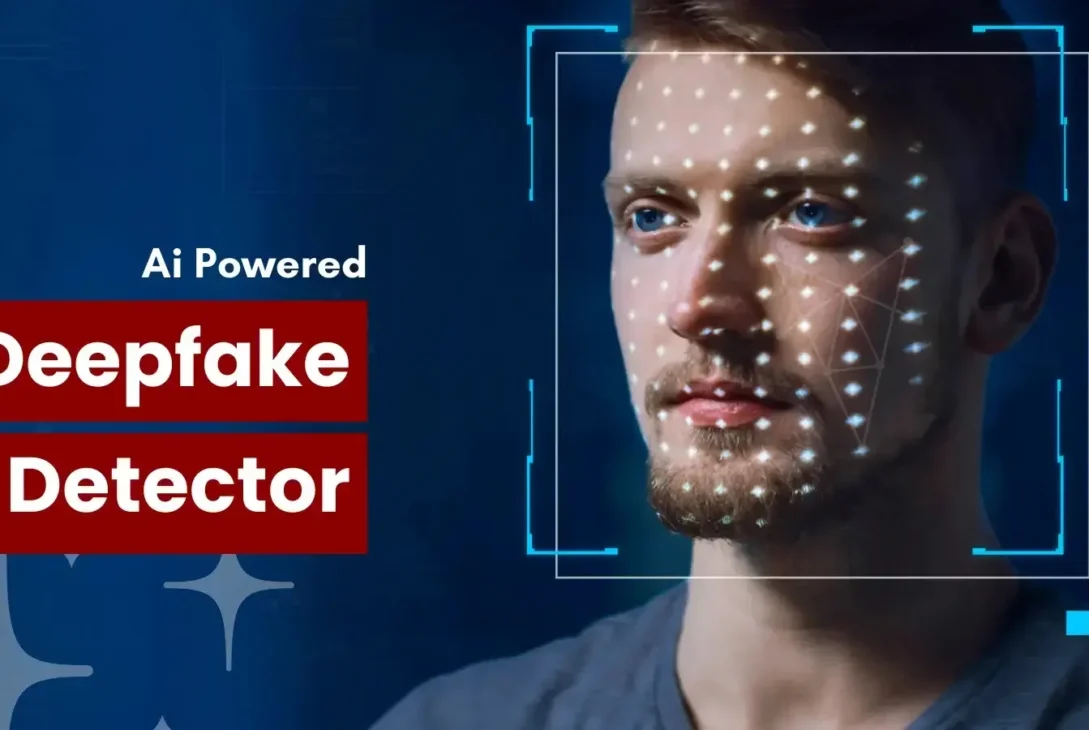
Deepfakes are fake media produced through the use of artificial intelligence to alter or produce very realistic pictures, videos, or audio.Deepfakes are becoming more widespread and are more believable, as what was previously a matter of technical skill is now available in ready tools.Deepfakes have become an increasing menace to individuals, enterprises, and governments due to fraud involving impersonation and identity theft, misinformation, and reputation loss.Their quality increases, and the methods of verification are not enough anymore, that is why the sphere of deepfake detection has become one of the most important technological innovations.
The importance of Deepfake Detection in the modern world.
The effect of deepfakes is much greater than viral videos.Deepfake videos and voice clones are used in the financial services to circumvent onboarding verification and to perform transactions that are fraudulent.In online platforms, innovated media can disseminate fabricated stories in a few minutes.In the case of enterprises that depend on digital identity verification, the lack of the ability to identify deepfakes can result in the violation of regulations, losses, and loss of user trust.Deepfake detection is no longer a luxury, but a component of the modern digital security.
How Deepfakes Are Created
In order to detect, one should know the process of deepfake detector.The vast majority of deepfakes are based on deep learning models (generative adversarial networks).These systems process a huge amount of real images or sounds to learn human facial movements, voice tone, or facial expressions patterns.The model then creates synthetic content that is based on these patterns with remarkable accuracy.The better the training data, the more difficult it is to tell a synthetic output and a real media and this is an ongoing challenge to the detection technologies.
Basic Methods of Deepfake Detection.
Deepfake detection is based on detecting subtle inconsistencies which cannot be perfectly copied by the generative models.Visual detection methods examine facial features, gaze, blinking, skin structure and lighting spots.Audio detection concerns unnatural pauses, mismatch of the frequency and the use of vocal artifacts which are absent in real speech of humans.Behavioral analysis is used to study the interaction of the person during a video session, and therefore, unnatural head movements or delays in timing are detected as signs of manipulation.When long distances, these signals can be combined to a large extent to enhance detection accuracy.
The use of Artificial Intelligence in Detection.
Artificial intelligence has two functions within the deepfake ecosystem.Although AI facilitates the generation of deepfakes, it has also proven to be the most efficient in the identification of it.The machine learning models are trained with huge datasets of real and manipulated media to learn the distinguishing characteristics of deepfakes.In time, such models will grow resistant to new deepfake methods.Learning should be an ongoing process because any given type of learning stagnation will soon be replaced by newer and more dynamic generative systems.
You can also read about Digital Verification.
Deepfake Detection on Digital Identity Verification.
Digital identity verification is one of the most serious applications of deepfake detection.On remote onboarding or authentication, scammers can impersonate genuine users by using deepfake videos or face swaps.Deepfake detection is used in conjunction with facial recognition and liveness detection to verify that it is a real and live person on the screen and that no fake faces are present.Such a multi-level system minimizes the chances of identity theft and makes it easier to comply with KYC and AML laws.
Difficulty in detecting Advanced Deepfakes.
Nonetheless, deepfake detection has not been easily achieved, although much progress is made.Deepfakes incidents can even pass visual inspection in high quality, particularly with low-resolution or compressed content.Large datasets that are required to train detection models are also restricted by privacy concerns.Moreover, deepfakes developers and detection algorithms are engaged in an arms race, and the developments on one side are rapidly impacting the other.This ensures that detection technologies need to be dynamic, expandable and constantly upgraded.
The Future of Deepfake Detection.
Multi-layered analysis and real-time analysis are the future of deepfake detection.However, rather than using one signal, sophisticated systems are built on biometric analysis, device intelligences, network behaviors and contextual information.The regulatory authorities also start to accept deepfakes as a significant threat, and it will probably result in the development of the standardized detection specifications on the industry level.Deepfake detectors will move beyond the periphery of digital trusts and be an inherent part of them as perceptions evolve.
Developing Trust in an artificial media environment.
Deepfakes are an excellent lesson that nothing can look as true anymore.Trust in the digital world will be determined by the capability to authenticate, as the synthetic media is enhanced and becomes more advanced.Deepfake detection serves as an essential defense mechanism as it detects manipulation before it becomes harmful.In the case of online organization, the purpose of investing in effective detection technologies is not only the prevention of fraud but also the protection of credibility and users and integrity of online interactions in an ever more artificial reality.